Home         Africa for Teachers       Africa for Kids       African Fables      

Ancient African Kingdoms
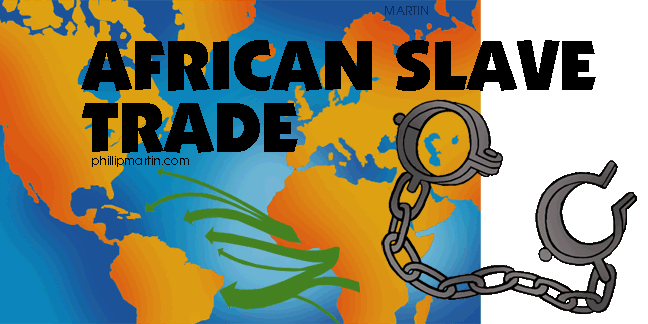
The Slave Trade 


Between 1450 and the late 1800's, it is estimated that between 10-15 MILLION Africans were kidnapped and sold into slavery. 

The expanding European empires in the New World, in North, South, and Central America,  lacked a major resource - workers. At first, the European colonists attempted to use Native Americans as a work force, but that did not work very well. Native Americans could slip away, and return with others to punish those who tried to enslave them.

The early colonists tried to bring people from Europe to work in the New World, both as indentured servants and as slaves. That did not work well either, especially in the tropical regions. The Europeans were not used to a tropical climate. Many died of disease. Some ran away and blended with other early colonists. 

The Portuguese soon discovered that Africans were excellent workers. They were used to more tropical climate conditions. The African people did not want to be slaves. They had to be captured and forced into slavery. A business sprang up - slavers. These were traders who captured and sold people into slavery. 

Many captured people died on the ships sailing to the New World. Conditions were terrible. People were packed into the hold of ship without regard to their safety or their most basic needs. The slaves who made it alive were strong workers and resistant to disease. 

The Slave Trade was incredibly profitable and incredibly cruel. It ripped families apart. People would come home from a hunt or from the fields and find their families missing. In some cases, entire villages were captured. The people in an entire village were rounded up and traded as slaves.  

For over 300 years, slaves were captured along the west coast of Africa, often with the active help of African kings and merchants. Slaves were traded for beads, textiles, brandy, horses, and guns. Slavery was illegal in the United States after the Civil War, but slaves continued to be traded in Central and South America for another 40 years until finally slavery was declared illegal in Central and South America as well. 


Slave Ships 

It's Equiano we're looking for .. 

Letters from the Kingdom of Kongo

Africa and the Atlantic Slave Trade

Slave Trade and Slavery 

Free Africa Presentations in PowerPoint format 


 To learn more about Africa,
 
click on Anansi


Illustrated by Phillip Martin  - All rights reserved
Anansi by clipahoy
We're Published! See Mr Donn & Maxie at SocialStudies.com 

Counter start date January 2006